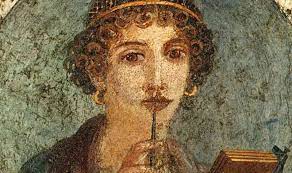
Restoring the rightful leading position that a woman might have had in her time requires audacious interpretative strategies. As a matter of fact, this daring approach calls into question both history and historiography as a whole. When we find something unexpected in history, it is important not to be afraid to ask the questions that will enable us to understand what has happened, without reducing whatever is new to something that we already know. There is no doubt that when, in history, we find evidence of a woman’s power, whether publically acknowledged or opposed by the men of her time, something important has happened and this “something” deserves to be expressed by questioning the given traditional interpretative structures. My paper retraces the main questions that were used to examine the sources that hand down the history of Hypatia and that were made possible by the environment in which I was living when working on my thesis.
Keywords: leadership, canon, acknowledge, context, authority.
- Introduction
In November 1985, while I was preparing for my first university exam, I read a magisterial account of ancient philosophy edited by Giovanni Reale in which I came across the story of a philosopher named Hypatia, who lived in Alexandria in Egypt during the first centuries of the Christian era.
The Alexandrian school” the book said “underwent a revival between the end of the IV and the beginning of the V century AD, above all thanks to the efforts of an exceptional female figure, the famous Hypatia. The daughter of a scientist, Hypatia first studied mathematical and astronomical sciences in considerable depth, then concentrated on philosophy and in her teaching focused above all on Plato and Aristotle. Her vast knowledge and remarkable influence meant that she eventually earned the enmity of Christians, becoming one of their victims in 415 AD.[1]
The telling of this story intrigued me and aroused my desire to learn more. In 1988 I started working with Professor Fernanda Caizzi Decleva on the sources that passed down the history of the life of Hypatia along with elements of her thinking. The result was the book Ipazia d’Alessandria[2] published in 1993 and then reissued in 2014 as a reworking of my degree thesis with the title I give here, namely Ipazia. Problemi di ricostruzione e di interpretazione.[3] In the twenty-five years between my degree thesis and the present, a great deal of philological work has been carried out and source analysis has been considerably simplified as a result. Yet in the history of thought the overall task of reconstruction and interpretation of this curious and extraordinary woman is far from over.[4] There has undoubtedly been a change in terms of the tools that contemporary historiography has at its disposal with which to read the story of this woman, with particular reference to the history of women in antiquity.[5] Through my contribution I intend to look further in depth into both questions, namely the point at which the philological reconstruction of the sources surrounding Hypatia came about and also the most useful method for reading and interpreting these texts in order to restore Hypatia’s face and voice to their rightful place in history.[6]
As a premise to what I intend to present later in this essay I would like to highlight the fact that from an interpretative point of view, Hypatia poses a problem similar to that of Socrates the philosopher – any observations we make about Hypatia can only come indirectly through the writings of those who knew her and were her pupils and of those who later wanted to pass on her life and thinking. As a result, this way of thinking comes to us via the reflections and reinterpretations of those who wrote about her or who talked with her,[7] mainly characters who are frequently removed from each other in terms of culture and historical context and whose work moreover has often been handed down in fragmentary and incomplete form. This problem is aggravated by the breadth of Hypatia’s knowledge, which ranged from practical philosophy to astronomy and which challenges the current tendency to fragment. The current tendency of fragmenting knowledge into specialized disciplines works against attaining a comprehensive view that integrates the findings of different perspectives, rather than leading to competing interpretations. Last but not least, the interpretative problem posed by Hypatia is similar to that presented by the study of all women in the ancient and late ancient world, whose lives and, where possible, whose thinking has come down to us through texts written by men deeply involved in the political conflicts of their time. Therefore, between the texts handed down by them and what they really wanted to say there is an abyss which, before we can look into it, requires us to equip ourselves with the appropriate tools so as to avoid falling into it.[8] I will then list the sources referring to Hypatia and indicate where they fit in a timescale, after which I will look at some of the questions that guided my research, starting from the philosopher’s knowledge and from the reading of a late nineteenth century text by Mario Bigoni[9] which I believe is still a key reference text. These questions were driven by genuine youthful curiosity and my research was carried out with an enthusiasm typical of a person of that age: this curiosity and youthful boldness was channelled by my mentor Fernanda Caizzi Decleva. Stimulated and encouraged by the liveliness of the political context, I found myself in the Milan Libreria delle donne during the 1990s. Here I developed an intimate friendship with Laura Balestrini whose concept of female freedom taught me to face the world with courage. Without that guide and without that context my research would not have been so lively and lucid. This makes the book still current and, I trust, a stimulus for the new scientific community that will be able to follow up on this research.[10]
- Historical sources
From a chronological point of view, the historical sources regarding Hypatia can be put into four categories:[11]
- Contemporaries: Theon of Alexandria, Synesius of Cyrene, Pallas, Socrates of Constantinople, Philostorgius and Hesychius of Miletus whose work has been handed down form Soudas.
- Those who wrote a hundred years after her death: Damascius, John Malalas, Cassiodorus.
- Historians and compilers of the VII, VIII, IX centuries AD: Yohannes Madabbar, Theophanous, Photius, Soudas.
- Commentators from the late Byzantine period: Nikephorus Kallistos, Nikephoras Gregoras. In terms of cultural contexts, it makes sense to distinguish between those authors who have a philosophical competence and speak this language and those who are interested above all in a historical narrative: Theon, Synesius, Pallas and Damascius are part of the first group; the others fall into the second category.
To date we know that a single work written by Hypatia has been handed down to the present day: the third book edition of the Ptolemic Mathematical System commented on by her father Theon. Hypatia’s work is therefore handed down as part of Theon’s Commentary on the Mathematical System. Then there are oral sources attributed to her, one in the letters of Synesius[12] and one in a text by Damascius, which presents one of the most contested anecdotes in the history of ancient philosophy.[13]
The works of Theon, Synesius, Socrates of Constantinople, Philostorgius, Damascius, Malalas, Cassiodorus and recently also those of Photius can be studied today in updated and edited versions and translations. This facilitates greatly the task of interpretion, which remains the most delicate issue regarding Hypatia. My reading of the sources has currently not been well received by contemporary historians who, on the contrary, oppose it (mostly Ronchey and Dzielska, partly Harich-Schwarzbauer), while it was adopted and reworked by a French scholar, Lacombrade, with whom – after the publication of my Hypatia in 1993 – I have long interacted and who, following our exchange, partially modified his reading of Synesius – and therefore his judgment on Hypatia – as his posthumous essay of 2001[14] indicates.
Pedro Jesus Teruel,[15] another modern interpreter of Synesius of Cyrene, shares this opinion and in the philosophical dictionary[16] Saffrey mentions my text as among the reference studies for the interpretation of Hypatia’s way of thinking. This conflict is essential in highlighting the fact that the interpretative slant aimed at restoring openness to the active support of a woman like Hypatia calls history and historiography as a whole into question and therefore requires a certain interpretative courage, which I find rather lacking in the scholars I have mentioned. My personal interpretative courage has emerged from being rooted in the here and now in a scientific and thought community that has allowed me to formulate less than obvious questions and to seek answers through rigorous scientific method.
When we find something unexpected in history, it is important to adopt an attitude of openness and research, allowing us to move on from the questions we are prepared to formulate and go in search of understanding without trying to reduce to what is already known. This “reduction” is what I think Ronchey and Dzielska do, a sort of diminishing of the quality and greatness of Hypatia. In this lack of historiographical generosity, I recognize a trace of “female envy” that prefers to “dumb down” rather than recognizing the superiority of the other woman. There is no doubt that where in history we find a female authority publicly recognized also by men, something has happened that goes beyond patriarchy: that “something” must be given expression starting from the awareness that when this feminine “something” is expressed it is never in the presence of female isolation.[17]
- The leading questions
In my opinion, the leading questions with which to examine those sources that hand down the history of Hypatia are simply these: what did this woman say that was so original and interesting that she deserved the recognition of having breathed new life into the philosophical school of Platonic ancestry? Does the thinking she passed down bear the imprint of a different female approach or is it a neutral entry in a story that continues to be distinguished by genealogies of male homosexuality? What was it that allowed a woman who was apparently unique in time and philosophical tradition to enter and become part of the philosophical genealogy and history of her time? What are the reasons for the raging fury against her that led to one of the most execrable deaths in the history of culture?
These are questions that historians who have looked at Hypatia before me have examined only partially if at all: as a matter of fact some of these questions have only been made possible by the context in which I happened to find myself while writing my degree thesis devoted to Hypatia, a situation in which – starting from the practice of relying on women – the concept of female authority was developed and expanded[18] which made the most significant point in the history of Hypatia intelligible to me.
- Hypatia’s originality
Contemporary witnesses say that Hypatia brought innovation to the history of thinking and that she was notable at that time for her fame and prestige. She was a student of her father the mathematician Theon, and a pupil at the Museion at Alexandria. From this institute, an heir to both the Greek mathematical tradition, with its devotion to rigorous deduction, and the Egyptian and Babylonian traditions, constantly aimed at solving practical problems with empirical methods – scientific works of inestimable value originated. Here the greatest geometrical systems of Greek mathematics were formulated, from Euclid’s Elements to the Conics of Apollonius of Perga; much of Archimedes’ brilliant work; the first heliocentric hypothesis formulated by Aristarchus; the astronomical treatises of Hipparchus and Ptolemy, the author of that monumental mathematical compilation known as the Mathematical System or Almagest which was so highly considered throughout the Middle Ages and finally, Diophantus’ Arithmetica, the greatest work on arithmetic in the Greek world, and one which is at the origin of a type of mathematical research still studied today as “Diophantine analysis”.
Diophantus was followed in Alexandria by Pappus, a highly skilled and competent mathematician to whom according to the historians of mathematics we owe the beginnings of a projective geometry that would only be fully developed in Europe in the seventeenth century. Pappus was succeeded by Theon, whose work essentially consisted of meticulously re-editing and commenting on traditional texts, including Ptolemy in particular. Contemporary philology is gradually restoring this work to a state of legibility, for example with the editing and translation into modern languages carried out by the Belgian scholar Anne Thion.[19]
Most of the sources that mention Hypatia link her name with that of her father Theon: “She was the daughter of the philosopher Theon” (Socrates of Constantinople), “daughter of Theon, she learned the mathematical sciences from her father” (Philostorgius), “of a nobler nature than her father” (Damascius), “daughter of the surveyor Theon, philosopher of Alexandria”( Soudas).
After more than a millennium, these comments still resonate with the significance and celebrity status that this father-daughter couple enjoyed during the later centuries of the time. But what exactly was it that caught the imagination of their contemporaries? There was nothing exceptional in a well-educated father teaching his daughter:[20] one thinks of the rhetorician Leontius and his daughter Athenais/Eudocia, who was a famous poet and, once Augusta of the Eastern Kingdom after having married Emperor Theodosius II in 421, a patron of Hellenic culture; then there was Plutarch, a student of the school of Athens (430/431) and his daughter Asclepigenia. Instead, what strikes contemporaries is the fact that Hypatia exceeded her father, according to Philostorgius “above all in the art of observing the stars”,[21] and according to Damascius for the fact that she did not devote herself only to mathematical sciences “but, not without breadth of mind, she also devoted herself to other philosophical sciences”.
This recognition that Hypatia surpassed her father in astronomical science comes from Theon himself. Theon’s work is also the oldest source of Hypatia’s scientific activity. In the heading to the third book of his commentary on Ptolemy’s mathematical system, Theon actually writes: “Theon of Alexandria’s Commentary on the Third Book of Ptolemy’s Mathematical System. Edition revised by the philosopher Hypatia, my daughter”.[22]
This heading tells us that Hypatia revised and edited Theon’s commentary on the third book of Ptolemy’s Mathematical System, the book concerning the motion of the sun. Such a task meant redoing the calculations, correcting any errors and therefore implied the most important work from the scientific point of view in terms of the job of the corrector and commentator.[23] Theon’s heading therefore confirms that at the time of the publication of this book Hypatia had surpassed her father at scientific studies. Harich-Schwarzbauer, in taking up a hypothesis already advanced by Cameron, supposes that Hypatia was also responsible for editing other books,[24] but this hypothesis is not supported by any specific references from Theon. I find more credible the hypothesis that Hypatia’s attention to the third book of Ptolemy’s Mathematical System may be judged as an indication of a particular interest specifically in the question of the sun’s motion.
The catalogue of her works, according to the 9th century scholar Soudas who draws from Hesychius of Miletus, a contemporary of Hypatia, confirms the originality of the philosopher in the astronomical field. As Soudas puts it: “She wrote a commentary on Diophantus, the astronomical Canon and the Conics of Apollonius”.[25] It is worth noting that Hypatia also commented on the Conics of Apollonius and Diophantus’ Arithmetic, works that are each in their own field – geometry and arithmetic -, the greatest expressions of the school of Alexandria.[26] It is worth noting that Hypatia combined two interests that were vastly different and distant from each other in antiquity: classical geometry and that part of arithmetic developed by Diophantus (a section of which was later called algebra), in fact, were separate and independent disciplines. Historians of mathematics normally observe that when Fermat and Descartes finally applied algebra to geometry in the seventeenth century, scientific discoveries took place that, from what we know today,[27] had been unthinkable in antiquity. The catalogue of Hypatia’s works invites us to consider that already in the IV-V century AD the school of Alexandria had come to consider these two areas of knowledge as compatible, with this combination in all probability aimed at the calculation of the motion of the stars. Might the Canone astronomico be the result of this work?[28]
The first innovation therefore that can be identified in the history of late antiquity thinking and attributed to Hypatia concerns advancements in the field of mathematical and astronomical sciences. The sources, however, also mention other things.
In the first place, the facts describe a movement of young men from the aristocracy of the Eastern Roman empire who came to Alexandria from all over, sometimes, as did Synesius, covering more than 800 kilometres with the transport of the day.[29] Synesius of Cyrene, whose work has been handed down in the corpus of Christian patrology and which has reached us almost entirely intact, is the most important witness of the philosophy taught by Hypatia[30] and was a faithful disciple until his death. Together with Hypatia, Synesius, of Christian birth and election but profoundly Hellenic in culture and in practice, also discussed his choice to accept the post of Bishop of Ptolemais in 410.[31]
Synesius, taking up and re-launching a typical inquisitive method of late antiquity, is the first of the sources on Hypatia to contrast the philosophical school of Athens with that of Alexandria in Egypt, recognizing an absolute primacy of the latter compared to the former.[32]
Later, twenty years after the death of Hypatia, Socrates of Constantinople would confirm this superiority of Alexandria over Athens by including the philosopher in an unprecedented genealogy of those who are heirs to a philosophical tradition that has seen the historical supremacy of the philosophers of Athens (a genealogy in cultural conflict with that of Alexandria and therefore alternative).[33]
Recalling the liveliness of the Alexandrian school at the time when Hypatia was active, Socrates adds a new element with regard to what was said by Synesius: he, in fact, links Hypatia to the Platonic genealogy through the mediation of Plotinus. In late antiquity Plotinus was seen as “the promoter of a profound renewal of Platonism”[34] and for this reason “in the fourth and fifth centuries, in Athens as well as in Apamea, Sardis and Alexandria, loyalty to Platonism was established by people declaring themselves disciples or successors of Plotinus, the founder of the new neo-Platonic school”.[35]
Socrates’ allusion to the fact that Hypatia “far outstripped all her contemporary philosophers” perhaps shows that, at the time of his writing, there was controversy over the definition of the true Platonic genealogy. Certainly there were those at the time who were worried about handing down a different philosophical genealogy in writing and that over time was more successful. The sources testify that a section of the Greek philosophers, which later turned out to be the validity of the philosophy of Iamblich ascendancy that was practiced in Athens and which contemplated the use of theurgic practices: Hierocles of Alexandria, but a student of Plutarch in Athens, defines a genealogy that ranges from Ammonius Saccas, Plotinus and Origen, up to Porphyry and Iamblicus, defining their successors “born of the divine […] race up to Plutarch of Athens”.[36] This genealogy is confirmed by Proclus in his Platonic Theology which traces a line going from Plotinus to Porphyry and Amelius as far as Iamblicus and Theodorus of Asine and arriving via the school of Athens to Syranus, who was the teacher of Proclus.[37] These genealogies, as the historian G. Fowden states, seem to have been constructed “specifically with the aim of showing that the only true heirs of Plato and Plotinus were the adherents of Iamblich theurgy” and this “led to the complete omission of the Alexandrian Neo-Platonists from Hypatia and Synesius onwards”.[38]
The succession delineated by Socrates of Constantinople – which Fowden does not seem to know – shows, however, that in the fifth century the fate of philosophy was still open and some supporters pushed in the direction indicated by Hypatia against that supported by the philosophers of Athens. The succession delineated by Socrates, in fact, involves the complete omission of all the philosophers that appeared between Plotinus and Hypatia, including Porphyry and Iamblicus, who were the most important links in the Athenian genealogy. The supporters of this genealogy are perhaps not by chance, Christian authors. In fact, in this case authors such as Augustine, who opposed philosophers of Iamblich ancestry, exalted Plotinus as the only philosopher capable of conceding an area of convergence between Christians and Hellenes on the cultural level[39] beyond religious affiliations, while at the same time indicating the extinction of this line of thought in their lifetimes, due to the fact that some gave themselves over to the magical arts, while others converted to Christianity.[40]
When he wrote his History of the Church Socrates had this same Augustinian concept of the history of philosophy in mind but saw in his time something that Augustine did not recognize and it was precisely for this reason that he wrote that the Platonic school was revived by Plotinus. He thus counts himself as among the greats of philosophy alongside Origen, Socrates and Plato in a succession in which religious belonging was not a discriminating factor. According to the historian of Constantinople, however, the story takes a different direction from how Augustine sees it and a new star of thought is born in the East: Hypatia.
This woman, he wrote, far surpassed the philosophers of her time. She had inherited the Platonic school revived by Plotinus and taught philosophy to anyone who wanted to learn it.[41] In this succession, the exclusion of Porphyry, Iamblicus and all the philosophers who declared themselves their heirs – and therefore heirs of Plotinus and Plato – is justified by the fact that they had given Platonism a magical-theurgic tendency which betrayed the spirit of Plotinus’ teaching. The genealogy that sees Hypatia as the third great leader of Platonism along with Plato and Plotinus is justified in that it seems to allow a fruitful and positive encounter between Hellenes and Christians on the philosophical level.[42]
The sign of female difference and inclusion in the history of thought
Those authors who tell us about Hypatia and who pass on her thoughts also note her femininity. The most surprising witness in this context is Damascius as he describes her while curing his pupil from his love pathos[43] whit a powerful maieutic gesture which brings the feminine difference – even through its most execrable sign, the impure menstrual blood – into the context of a tradition of homosexual love typical of the Platonic school.[44]
Signs of this search for a feminine sign in the history of thought are also found in the work of Synesius. In his Dion, Synesius refers to Socrates, the philosopher, describing him as a pupil of Aspasia:[45] at the origin of Socrates’ knowledge is his relationship with a woman in whom he recognizes the authority of a Teacher, and who for him is unmatchable.[46]
Here the historical truth of the relationship between Aspasia and Socrates does not matter. What is important is Synesius’ interpretation of it: at the origin of Socrates’ knowledge is his relationship with a woman in whom he recognizes the authority of a Teacher, and who for him is unmatchable.
Even from an intuitive point of view and without going into the details of a philological exegesis, the passages quoted by Damascius and Synesius allow us to attempt an answer to the question that cannot fail to accompany any study of Hypatia: how can a woman, apparently unique in the philosophical tradition and over time, enter into philosophical genealogy and history? A first answer is this: Hypatia does so by looking for symbolic references that give her actions stability, including them in a tradition that bears the sign of female difference and therefore makes the history of a woman and its meaning acceptable in the history of culture and political life.
Hypatia enter into philosophical genealogy and history by looking for symbolic references that give her actions stability, including them in a tradition that bears the sign of female difference and therefore makes the history of a woman and its meaning acceptable in the history of culture and political life. Is it by this irreducible trait of sexuality, in the willingness to freely desire and travel the world as a woman, that the ability to affect history is measured?
The assassination of Hypatia
The authoritative word of a woman in a structure of strongly institutionalized hierarchical male power, such as was taking place in the fourth century Catholic church, may have aroused a virulent and uncontrolled reaction, perhaps beyond those selfsame intentions of Bishop Cyril who is indicated by a Christian source[47] as the ideological instigator of this heinous assassination. Some say that Hypatia owes her fame to this death. I showed that the contemporaries of Hypatia had recognized a merit in her that would in any case remain in the history of thought. Her violent death undoubtedly sanctioned her political authority. This death was not a casual accident, but the moral consequence of a coherent lifestyle choice and a philosophical approach that puts the practice of political virtue at its heart. It is entirely in keeping with this choice of lifestyle that Hypatia was subjected to her ultimate political attack which saw her defeated and “erased” from the immediate present but which saw her triumphant in the years to come.
BIBLIOGRAPHY
Sources.
Augustinus, Epistolae, Patrologiae cursus completus (Latina series), ed. by J.P. Migne t. 33; trans. it. T. Alimanti, L. Carrozzi, Lettere, in Opere di sant’Agostino, Roma, Città Nuova, 1969, vol. XXI.
Damascius, Vita Isidori, ed. by C. Zintzen, Damaschi vitae Isidori reliquiae, Hildesheim, Olms, 1967. Palladas, inAnthologie greque. Première partie. Anthologie Palatine, ed. by P. Waltz, G. Soury, Paris, Les
Belles lettres, 1974, vol. VIII; and in Antologia Palatina, edited by F.M. Pontani, Torino, Einaudi, 1978. Philostorgius,Historia Ecclesiastica, Patrologiae cursus completus (Graeca series), ed. by J.P. Migne, t. 65;
Kirchengeschichte, ed. by J. Bidez Akademie Verlag, Berlin, 1981.
Photius, Bibliotheca, ed. by R. Henry, Photius. Bibliothèque, Paris, Les Belles Lettres, 1959-1991.
Proclus, Theologia Platonica, ed. by H.D. Saffrey, L.G. Westerink, Proclus. Théologie platonicienne, 3 voll. (lib. 1-3), Paris, Les Belles Lettres, 1968; trans. it. E. Turolla, La teologia platonica, Bari, Laterza, 1957.
Socrates Scholasticus, Historia Ecclesiastica, Patrologiae cursus completus (Graeca series), ed. by J.P. Migne, t. 67; ed. by W. Bright, Socrates’ Ecclesiastical history, Oxford, Clarendon, 1893; Kirchengeschichte, ed. by G.C. Hansen (con M. Sirinjan), Akademie Verlag, Berlin 1995; Socrate de Constantinople, Histoire Ecclésiastique, Les Éditions du Cerf, Paris 2004-2007.
Suda, Lexicon, ed. by A. Adler, Leipzig, Teubner, 1928-1938.
Synesius, Epistolae, ed. and trans. by A. Garzya, in Opere di Sinesio di Cirene, Torino, Utet, 1989, pp. 65-156.
Theon, Commentaria in Ptolemaei syntaxin mathematicam III-IV, ed. by A. Rome, Commentaires de Pappus et de Théon d’Alexandrie sur l’Almageste, Studi e Testi 106, Città del Vaticano, Biblioteca Apostolica Vaticana, 1943, vol. III.
Essays.
G. Beretta, Attualità di Ipazia, “Via Dogana” 105/2013, pp. 18-19.
G. Beretta, Il segno politico di Ipazia nella poesia civile di Pallada, “Itinera” 4/2012, pp. 1-19.
G. Beretta, Ipazia d’Alessandria, Roma, Editori Riuniti, 1993 (new edition 2014).
G. Beretta, Ipazia. Problemi di ricostruzione e di interpretazione, supervisor F. Caizzi Decleva, Università degli Studi di Milano, 1991.
G. Beretta, Socrate di Costantinopoli: il paradosso di un elleno cristiano, “Salernum”, anno XIX, n. 34-35, January/December 2015, pp. 83-86.
M. Bigoni, Ipazia d’Alessandria, Venezia, Tip. G. Antonelli, 1887
A. Bruzzone & R. Farina, La resistenza taciuta. Dodici vite di partigiane piemontesi, Milano, Bollati Boringhieri, 2003 pp. 172-173.
A. L. Cameron, Isidore and Hypatia: on the editing of mathematical texts, “Greek Roman and Byzantine Studies” 31 (1990), pp. 103-127.
Centro Culturale Virginia Woolf B, L’autorità femminile. Incontro con Lia Cigarini, Roma, 15 February 1991.
L. Cigarini, Note sull’autorità femminile, “Madrigale” n. 4 (February 1990), pp. 16-18.
F. De Musso, Il mestiere della prof, address at the “Conference for teachers on the Pedagogy regarding Sexual differences”, “Fabio Testa” Business Institute, Milano, 22 February 1990, p. 14.
M.A.B. Deakin, The Primary Sources for the Life and Work of Hypatia of Alexandria, http://www.polyamory.org/~howard/Hypatia/primary-sources.html.
M. Dzielska, Hypatia of Alexandria, Cambridge Massachusetts London England, Harvard University Press, 1995.
M. Dzielska, Ipazia e la sua cerchia intellettuale, in Paganism in the Later Roman Empire and in Byzantium, edited by M. Salamon, “Byzantina et Slavica Cracoviensia”, 1991, pp. 45-60.
S. Ferrando, Michel Foucault. La politica presa a rovescio, Milano, Franco Angeli, 2012
G. Fowden, The Pagan Holy Man in Late Antique Society, “Journal of Hellenic Studies” 102 (1982) pp. 33- 59.
M.O. Goulet-Cazé, L’arrière-plan scolaire de la Vie de Plotin, in L. Brisson, M.O. Goulet-Cazé, D. O’Brien,
Porphyre. La vie de Plotin, Paris, Vrin, 1982, pp. 230-327.
K.G. Holum, Theodosian Empresses, Women and Imperial Dominion in Late Antiquity, Berkeley, University California Press, 1982.
Ipazia (ed.), Autorità scientifica, autorità femminile, Editori Riuniti, Roma, 1994.
Chr. Lacombrade, Hypatie, Synésios de Cyréne et le patriarcat alexandrin, “Byzantion” 71 (2001), pp. 401- 421.
Chr. Lacombrade, Synésios de Cyréne hellèn et chrétien, Paris, Les Belles Lettres, 1951.
C. Minardi, Remembering Ancient Women: Hypatia of Alexandria and her Communities, Georgia State University, 2011http://scholarworks.gsu.edu/english_diss.
G. Reale, Storia della filosofia antica, Milano, Vita e Pensiero, 1984.
S. Ronchey, Ipazia, l’intellettuale, in A. Fraschetti (edited by) Roma al femminile, pp. 213-258, Roma-Bari, Editori Laterza, 1994.
L. Russo, La rivoluzione dimenticata, Milano, Feltrinelli, 2001.
H.D. Saffrey, Hypatie d’Alexandrie, in Dictionnaire des philosophes antiques III, 2000, pp. 414-418.
H.D. Saffrey, Pourquoi Porphyre a-t’il édité Plotin? Réponse provisoire, Conference at the Università degli studi di Milano, May 1991.
H. Harich-Schwarzbauer, Hypatia. Die spätantiken Quellen. Eingeleitet, kommentiert und interpretiert, Peter Lang, Bern, 2011.
D. Shanzer, Merely a cynic gesture?, “Rivista di Filologia e Istruzione Classica”, 113 (1985), pp. 61-66.
P.J. Teruel, Filosofía y ciencia en Hipatia, Madrid, Editorial Gredos, 2011.
P.J. Teruel, Ipazia come anello della grande tradizione filosofica greca, “Itinera” 4/2012, pp. 20-45.
NOTES
[1] G. Reale, Storia della filosofia antica, Milano, Vita e Pensiero, 1984 vol. IV p. 691.
[2] G. Beretta, Ipazia d’Alessandria, Roma, Editori Riuniti, 1993 (new edition 2014).
[3] G. Beretta, Ipazia. Problemi di ricostruzione e di interpretazione, supervisor F. Caizzi Decleva, Università degli Studi di Milano, 1991.
[4] Chr. Lacombrade shares this opinion in Hypatie, Synésios de Cyrène et le patriarcat alexandrin, «Byzantion» 71 (2001), p. 404.
[5] Significant reflections on the historiographical methods can be found in the article by C. Minardi, Remembering Ancient Women: Hypatia of Alexandria and her Communities, Georgia State University, 2011, http://scholarworks.gsu.edu/english_diss.
[6] The 1993 book Ipazia d’Alessandria, revised and reprinted in 2014, looks at and comments upon the historical sources around Hypatia. It was the first in a series of scientific works which followed shortly after (S. Ronchey, Ipazia, l’intellettuale, in Roma al femminile, pp. 213-258, edited by A. Fraschetti, Roma-Bari, Editori Laterza, 1994; M. Dzielska, Hypatia of Alexandria, Cambridge Massachusetts London England, Harvard University Press, 1995). The section from my degree thesis dealing with reconstruction and translation of the various sources in up-to-date language was previously unpublished. In H. Harich-Schwarzbauer’s Hypatia. Die spätantiken Quellen. Eingeleitet, kommentiert und interpretiert, (Peter Lang, Bern, 2011), which for the first time presents the translated collection together with comments from a selection of original source witnesses about Hypatia. The author reports having completed her studies on Ipazia in the same years in which the aforementioned texts were published, then waiting for the opportunity for publication which eventually happened in 2011. As with regard to my research, some studies on the sources have been more recently published, the fruit of a preparatory work for an essay exclusively dedicated to the presentation of the testimonies on Hypatia: see G. Beretta, Il segno politico di Ipazia nella poesia civile di Pallada, “Itinera” 4/2012, pp. 1-19 and G. Beretta, Socrate di Costantinopoli: il paradosso di un elleno cristiano. “Salernum”, anno XIX, n. 34-35, January/December 2015, pp. 83-86.
[7] See G. Beretta, Attualità di Ipazia, «Via Dogana» 105/2013, pp. 18-19.
[8] See also the work by P.J. Teruel, Ipazia come anello della grande tradizione filosofica greca, “Itinera” 4/2012, pp. 20-45, p. 44.
[9] M. Bigoni, Ipazia d’Alessandria, Venezia, Tip. G. Antonelli, 1887.
[10] At the time of its publication the book provoked considerable resistance in certain sections of the Accademia Italiana, owing its good fortune more to a part of the international scientific community and, it goes without saying, to the Italian women’s movement: as a matter of fact it represents an innovation in the way history can and must be re-read and thereby rewritten in order to make the characteristic and communicative authority of a woman more intelligible; a woman who emerges with extraordinary strength in a gallery of almost exclusively male portraits. In terms of women’s lives, reflections and ideas on the connection between interpretational lucidity and their roots in a women’s scientific community have recently been proposed by Minardi, p.34.
[11] For a quick survey of the sources regarding Hypatia see also M.A.B. Deakin, The Primary Sources for the Life and Work of Hypatia of Alexandria,http://www.polyamory.org/~howard/Hypatia/primary-sources.html; H.D. Saffrey, Hypatie d’Alexandrie, in Dictionnaire des philosophes antiques III, 2000, pp. 414-418. One study on the sources that constitute the first systematic attempt to produce a philological edition with translation in modern language is the work by Harich-Schwarzbauer.
[12] Syn, Ep. 81.
[13] To read the quoted passage, see infra pp. 10-11. Regarding the controversy over its interpretation, all the historical studies from the 19th and 20th centuries and later dedicated to Hypatia up to and including the recent Harich-Schwarzbauer study should be systematically re-examined – something that as far as I am aware has not yet been done.
[14] Lacombrade, 2001.
[15] Teruel, 2012, pp. 20-45, p. 44.
[16] Saffrey, 2000, p. 418.
[17] Regarding this matter which has been discussed by the International Women’s Movement, see also Minardi, p. 27 and how it is examined in terms of the revision of the histories of women throughout antiquity, Minardi, pp. 34-44.
[18] Hypatia (ed.), Autorità scientifica, autorità femminile, Editori Riuniti, Roma, 1994. In terms of the concept of female authority see L. Cigarini, Note sull’autorità femminile, “Madrigal” n. 4 (February 1990), pp. 16-18; Virginia Woolf Cultural Center B, Female authority. Meeting with Lia Cigarini, Rome, 15 February 1991; F. De Musso, Il mestiere della Prof, address at the “Seminar for Teachers on the Pedagogy of Sexual Difference”, “Fabio Testa” Business School Milan, 22 February 1990, p. 14; Hypatia (ed.), Autorità scientifica, autorità femminile, Editori Riuniti, Rome, 1994.
[19] See Thion, Le «Petit commentaire» de Théon d’Alexandrie aux Tabelles faciles de Ptolémée, edited and translated by A. Tihon, Città del Vaticano, Apostolica Vaticana Library, 1978; A. Thion, Theon of Alexandria and Ptolemy’s Handy Tables, in Ancient Astronomy and Celestial Divination, Dibner Institute Studies in the History of Science and Technology, ed. by N.M. Swerdlow, Cambridge, MIT, 1999.
[20] See also Minardi, p. 88.
[21] Dam., Vita Isidori, *102 (p. 77, 3-4).
[22] Theon, Comm. in Ptol. syn. math., vol. III, p. 807.
[23] AL. Cameron, Isidore and Hypatia: on the editing of mathematical texts, “Greek Roman and Byzantine Studies” 31 (1990), p. 126.
[24] Harich-Schwarzbauer, p. 329.
[25] Souda, IV 644, 3-5.
[26] Angela Alioli, mathematician at Milan’s Libreria delle donne drew my attention to this point.
[27] L. Russo, La rivoluzione dimenticata, Milano, Feltrinelli, 2001 puts forward the hypothesis that modern day scholars have read and “incorporated” ancient books and therefore the innovations of modern science, starting from the work of Leonardo, for example, are to be credited to the “ruminatio” of these intermediate works that were then never handed down. Russo gives the example of Archimedes’ works, but his observation can be extended to other works and must in any case be considered as a possible reading of the scientific revolution that occurred in the modern era. In the case of Hypatia, it must be remembered that the editing and commentary on the mathematical system of Ptolemy are kept in the tremendous Medici collection, which influenced the Renaissance greats.
[28] The possibility that the Canone astronomico is an original work is connected to the philological reading of the Souda, IV 644, 3-5 text which indicates two commentaries attributable to Hypatia and a text entitled Canone astronomico. The first to question the correctness of the text handed down was Tannery in 1880 but his suggestions were not taken into consideration by the modern publisher of the Souda, Ada Adler, who preferred to keep the traduced version. For the reasons that make me lean towards Adler’s choice, I would refer to Beretta, 2014, p. 65, note 85. Also Harich-Schwarzbauer, p. 328 tends not to insert the preposition in front of the title Canone astronomico, but – unlike me – believes that here Hesychius refers to the edition of the third book of the mathematical system of Ptolemy and not to an original text.
[29] The observation is by Teruel, 2012, p. 30.
[30] The choice of which part of Synesius’ work to identify as a source on Hypatia also poses an interpretative problem. Harich-Schwarzbauer, p. 23 chooses the letters addressed to her and a passage from A Peonio sul dono. It is an understandable choice, which is in line with the philological tradition and which has the merit of allowing a very important in-depth study of the texts. However, this choice precludes the scholar from making very significant connections between the texts read and the rest of Synesius’ work. For my part I adopted the approach suggested by Chr. Lacombrade, Synésios de Cyréne hellèn et chrétien, Paris, Les Belles Lettres, 1951 which considers the whole of Synesius’ work as an uninterrupted dialogue between teacher and student and I then brought it to the appropriate consequences while I criticized the French scholar who – despite the correctness of the initial approach – he had then become stranded, like others, while following the idea of a Hypatia “transmission belt”. For this dialogue with Lacombrade see Beretta, 2014, pp. 84-89 while for the subsequent development of the thought of the French scholar, see the posthumous essay, Lacombrade, 2001.
[31] The results of this intense exchange were handed down in the letters of Synesius, see in particular ep. 105 in which Synesius explains the reasons behind his choice to accept the position of bishop and the constraints he placed on the Catholic community that honoured him with this position.
[32] Syn., ep. 136.
[44] Regarding the complex and intriguing interpretation of this passage by Damascius see Beretta, 2014, pp. 239-295. The debate on the truthfulness of this episode and on its correct interpretation is the key to understanding the resistance of historiography in the face of Hypatia’s freedom of speech and action.
[33] Socr., Hist. Eccl., VII 15.
[34] M.O. Goulet-Cazé, L’arrière-plan scolaire de la Vie de Plotin, in L. Brisson, M.O. Goulet-Cazé, D. O’Brien, Porphyre. La vie de Plotin, Paris, Vrin, 1982, p. 249.
[35] Ibidem.
[36] Hier. De providentia, in Phot. Bibl., cod. 214, 171b-173a.
[37] Procl. Theol. Plato, I, pp. 15-17.
[38] G. Fowden, The Pagan Holy Man in Late Antique Society, “Journal of Hellenic Studies” 102 (1982), pp. 34-35.
[39] Aug., ep. 118, 33: “Since then the Platonists were at that time surrounded on all sides by false and discordant philosophical theories and had no authority powerful enough as to impose faith, they preferred to hide their doctrine so that it would be the object of research rather than exposing it to the vulgar to be profaned. However, when the religion of Christ began to spread amidst the wonder and emotion of the kingdoms of this world, they also began to emerge into the light, to manifest and explain the doctrine of Plato to all. Then the school of Plotinus flourished in Rome, which had many very alert and sagacious spirits as disciples”.
[40] H. D. Saffrey, Pourquoi Porphyre a-t’il édité Plotin? Réponse provisoire, Conference at the Università degli Studi di Milano, May 1991: “Some of them … unfortunately were left to be corrupted by the curiosity of the magical arts; others, instead, recognizing that in Jesus our Lord the same immutable truth and wisdom was personified to which they had aspired with every effort, passed into his service”. According to Saffrey Augustine alludes in the first case to the Eastern schools that between the III and IV centuries had taken a decidedly magical-theurgic inclination (think of the school of Iamblicus in Apamea, of Edesius and Sosipatra in Pergamum; of Maximus, teacher of the emperor Julian at Ephesus and of Chrysanthius at Sardis), in the second to Gaius Marius Victorinus who, after converting to philosophy, had made the decisive leap passing into the ranks of Christians.
[41] Socr., Hist. Eccl., VII, 15.
[42] This theme, highlighted by Socrates, can also be found in other works by Synesius. For more details see Beretta, 2014, pp. 110-125.
[43] Dam., Vita Isidori, *102 (p. 77, 1-17) e *105 (p. 81, 5-6).
[45] Syn., Dion, [14], p. 707.
[46] Syn., Dion, [14], p. 707.
[47] Socr., Hist. Eccl., VII 15.

 Gemma Beretta